Updated 18 April 2026 · 9 min read
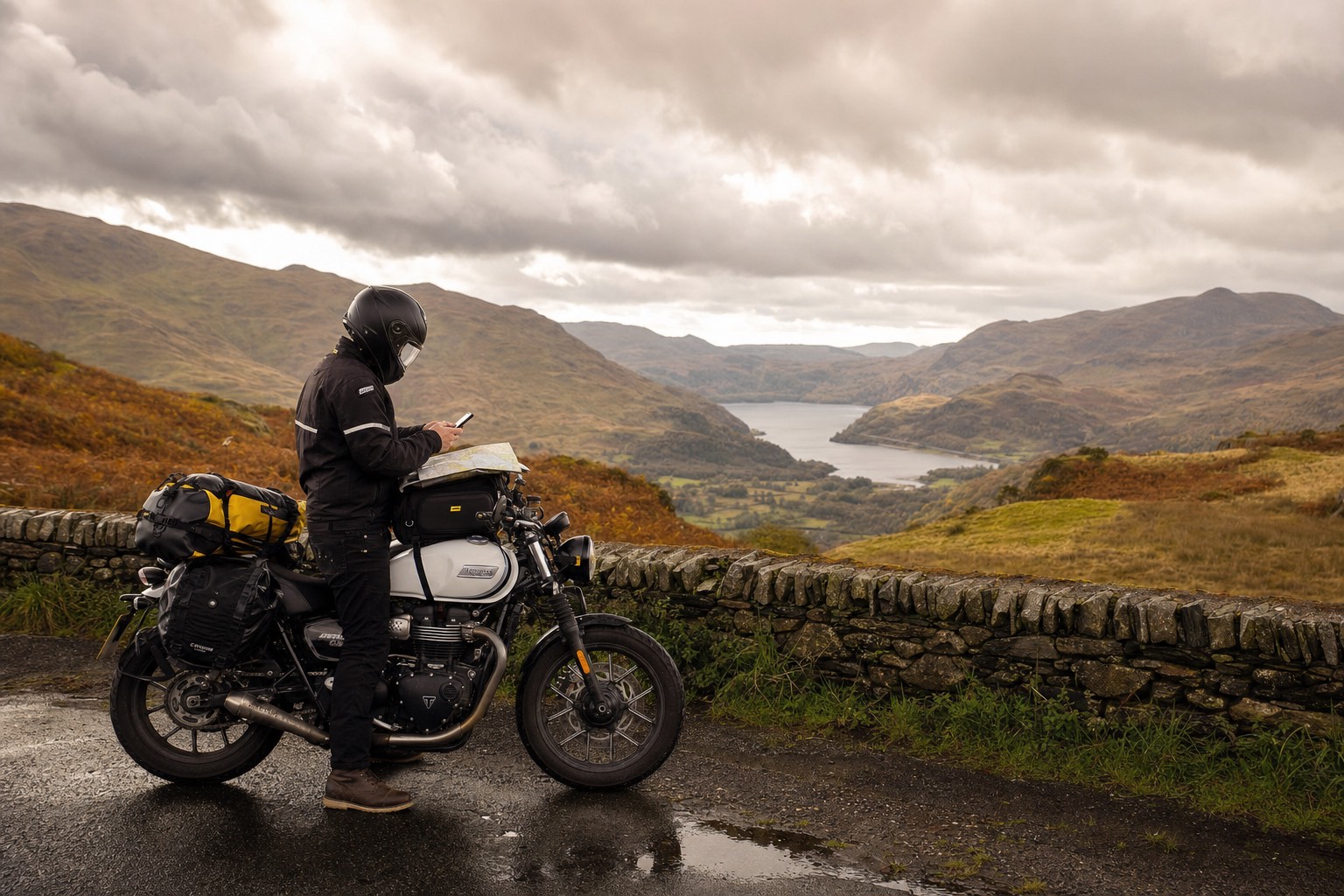
Wales’ mountains make their own weather. You can leave a sunny valley and be in cloud, wind and rain within ten minutes of climbing a pass. Good gear isn’t about looking the part — it’s what lets you keep enjoying the ride when conditions turn.
Helmet
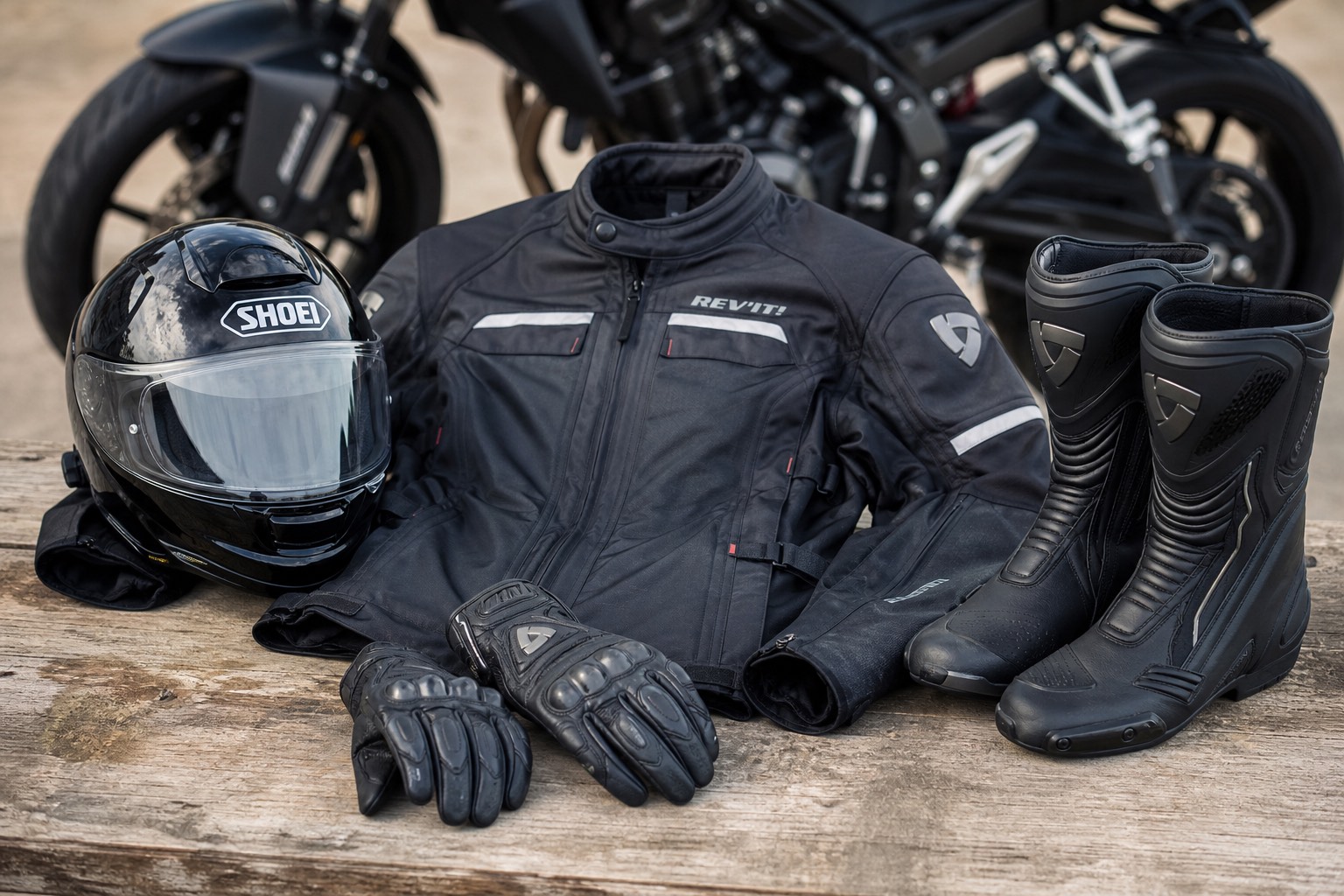
A well-fitting, ECE 22.06-rated helmet is non-negotiable. For Welsh touring, many riders prefer a flip-front (modular) or full-face with a Pinlock anti-fog insert — condensation and drizzle are constant companions here. A drop-down sun visor is genuinely useful when you’re chasing the sun in and out of valleys.
Layering is everything
The single most important principle for riding in Wales is layering. Rather than one heavy jacket, build up:
- Base layer: a technical wicking top and bottoms — never cotton, which stays cold and wet
- Mid layer: a fleece or thermal you can add or remove at cafe stops
- Outer layer: an armoured textile jacket and trousers with a waterproof membrane
Waterproofs
Even on a promising forecast, carry waterproofs. A laminated (drop-liner or laminated) textile suit handles most Welsh rain, but a packable over-suit is cheap insurance. Wet weather also means wet gloves and boots — see below.
Gloves & boots
Bring two pairs of gloves if you can — a summer pair and a warm/waterproof pair — because cold, wet hands ruin concentration fast. Over-the-ankle, waterproof boots with a good sole keep your feet dry and give confidence at petrol-station stops and on wet pegs.
Don’t forget
- Neck tube/buff — cheap, and blocks wind-chill on the passes
- Clear and tinted visors, or a photochromic one
- Ear plugs for long motorway/A-road stretches to the good roads
- Hi-viz element or bright kit — Welsh lanes are shady and narrow
Whatever you wear, dress for the mountain, not the car park. It’s far better to peel a layer off at the Ponderosa than to be shivering on the top of the Black Mountain Pass.
Next, read our guide to planning a Welsh tour and our tips on riding safely on mountain roads.